street lighting that thinks, responds and saves
Truly adaptive street light automation with AMP X LUMA. One complete ecosystem - controllers, motion sensors and a cloud platform - that cuts energy costs by up to 80% without ever compromising public safety.


AMP X LUMA powered by Lusety
AMP X LUMA delivers the most advanced adaptive street light automation, powered by Lusety. Their hardware and firmware - engineered and manufactured in Lithuania - combine motion sensing, controllers and a TALQ-certified cloud into one seamless innovation for cities and municipalities.
- Innovation from Lithuania
- Field-proven across European cities
- Open, interoperable, TALQ-certified
Complete urban lighting, made simple
AMP X LUMA brings smart street lighting to Luxembourg and the Grand-Region, built on the proven Lusety smart urban lighting ecosystem - developed together with cities, for cities, and deployed across European municipalities. Built on open standards, the lighting network doubles as a smart-city backbone for air quality sensors, traffic monitoring and CCTV.
Designed together with cities, for cities
Every feature is co-developed with municipalities. One platform gives you full network visibility, 24/7.
Lighting that adapts, not just follows a script
Real-time motion tracking follows pedestrians, cyclists and vehicles regardless of speed or direction - fully automated, no programming needed.
Direct expert support, no intermediaries
We handle pre-sale design, installation and post-sale technical assistance - all in-house.
From streetlight to dashboard in three steps
Plug
Luminaire controllers and motion sensors mount tool-free on any Zhaga Book 18 socket; cabinet controllers slot into existing street cabinets - no rewiring, no disruption.
Connect
Devices pair through a mobile installation app and immediately stream encrypted real-time data over radio mesh and LTE to the cloud.
Manage
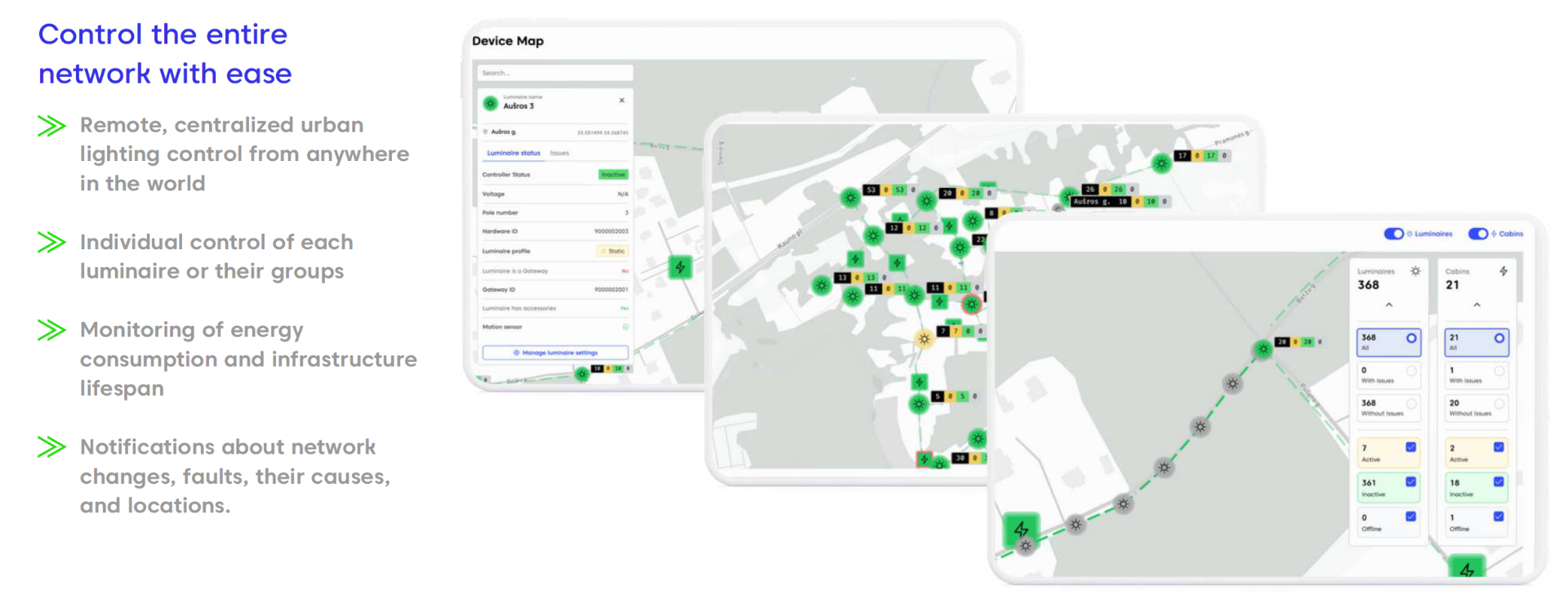
The whole network on one map-based dashboard: control, scheduling, energy analytics, fault alerts and predictive maintenance - from anywhere, 24/7.
The building blocks of smart lighting
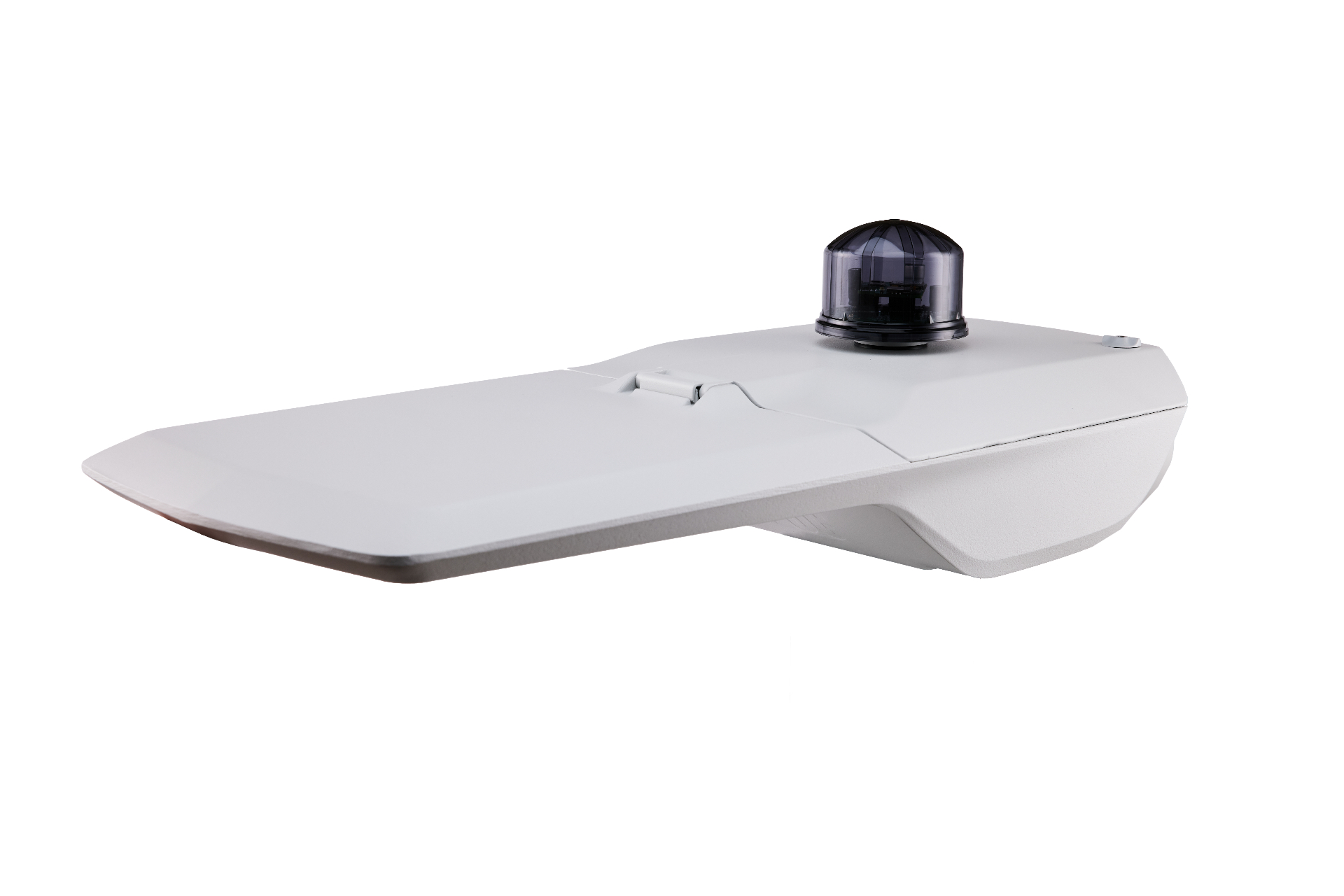
LIGHTWAVE
Controls each streetlight over a local radio mesh; dimming fully adjustable 0-100% per luminaire, zone or city.
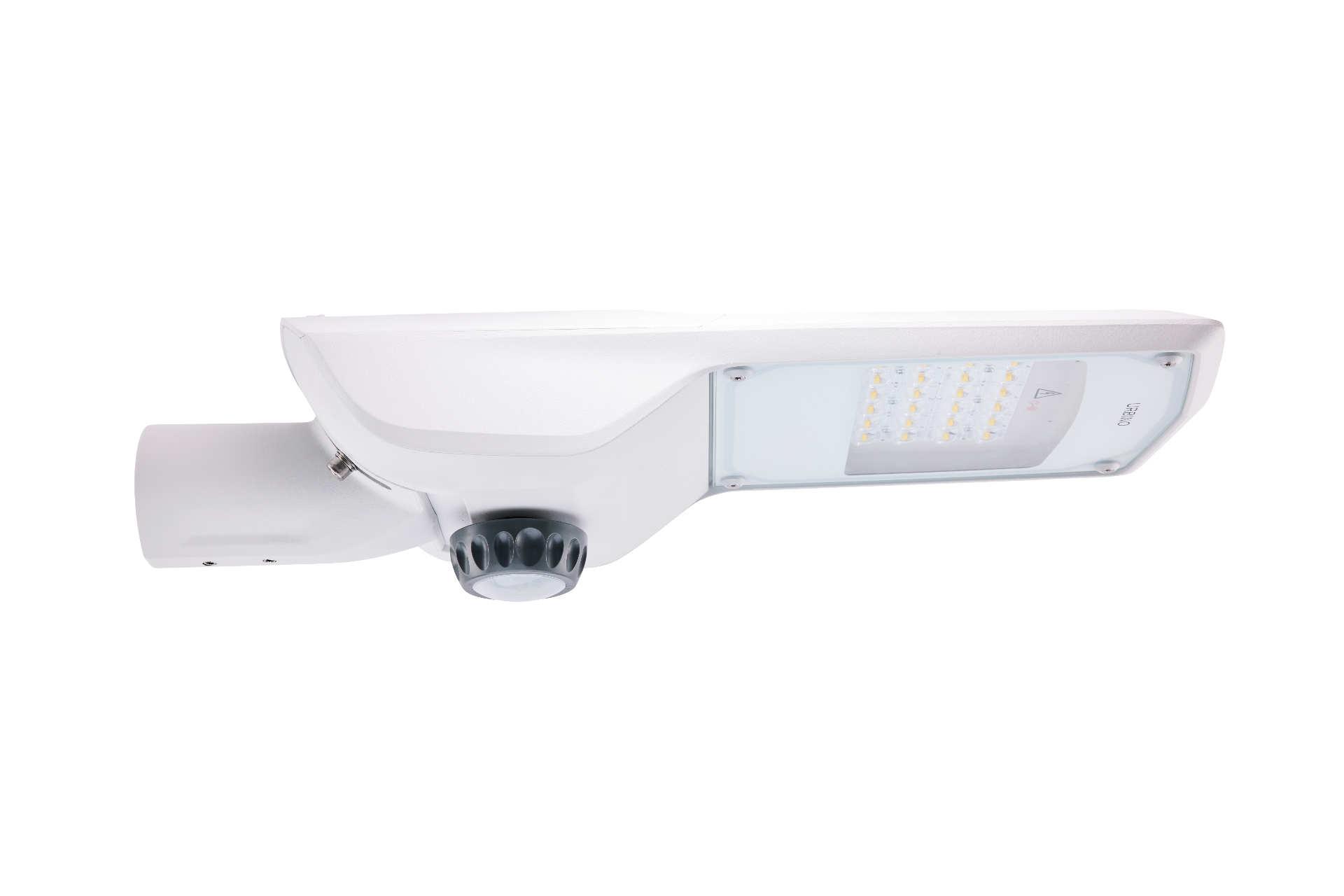
LIGHTWAVE-LTE
Built-in LTE modem, acts as a gateway streaming mesh data to the cloud.
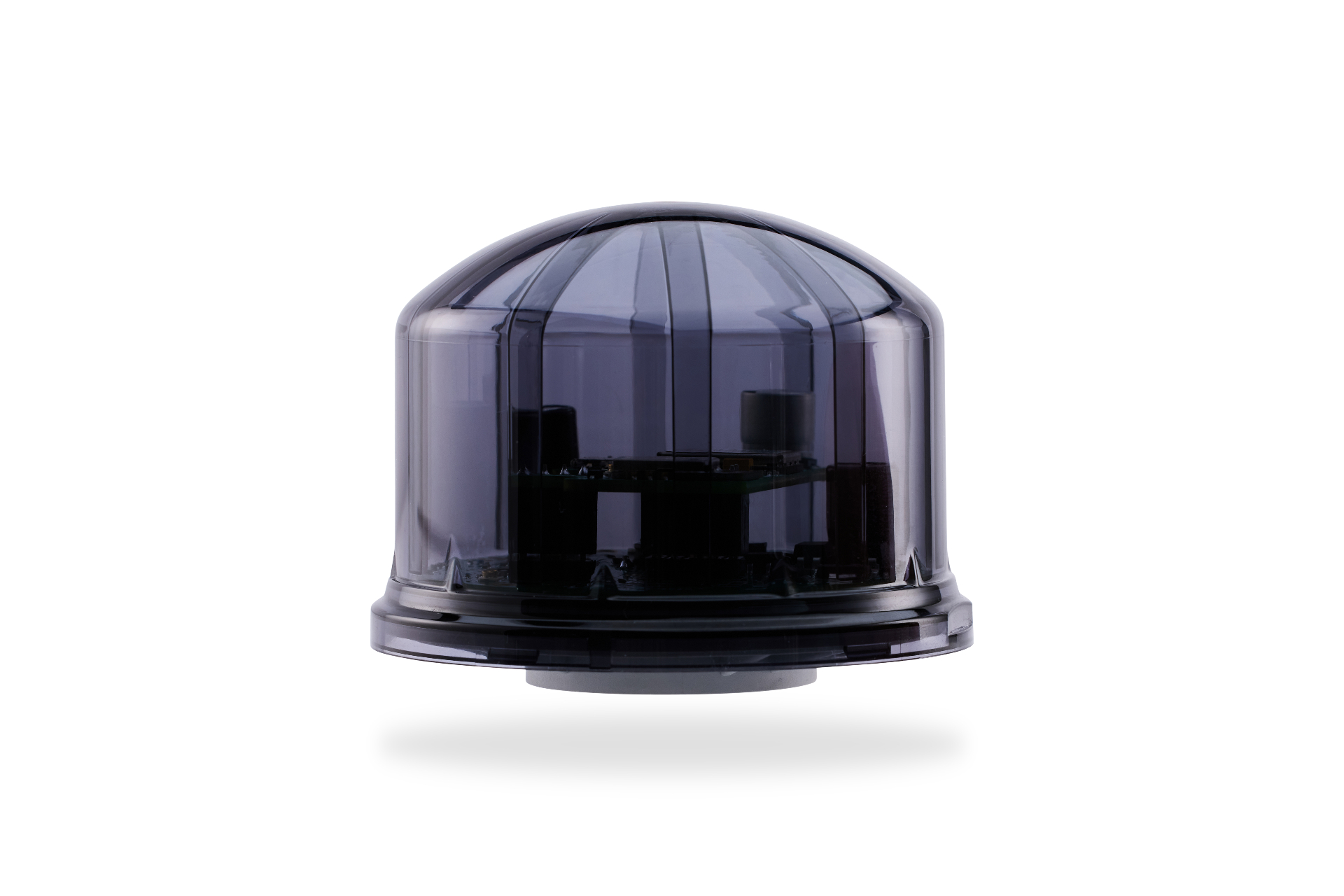
LUMAWISE Motion
Detects pedestrians, cyclists and vehicles including direction, triggering adaptive lighting exactly where needed.
LIGHT KEEPER
Controls entire lighting zones: four switched circuits, three-phase power metering and autonomous operation during network outages.
A bubble of light that moves with you
Traditional motion-based lighting follows fixed scripts - and fails when real life doesn't. AMP X LUMA tracks actual movement and shapes the light around it in real time.
Lights ahead brighten
The pool of light forms in front of movement, so the path ahead is always clear and safe.
Lights behind dim
Once you've passed, luminaires fade back down - saving energy exactly where it's no longer needed.
No scenario ever outsmarted
Direction changes, speed variations, sudden stops - the system adapts instantly, with zero extra programming.
Every layer of technology cuts the bill
Annual energy use for the same street, moving from legacy sodium to fully adaptive LED - measured on real municipal deployments.
Urban area - 6,000 luminaires · annual energy use
HORIZON - the brain of the network
A TALQ-certified, cloud-based, map-based dashboard secured with AES-256 end-to-end encryption, two-factor authentication, role-based access and full audit logs.
- Centralized one-tap control & illumination scenarios per zone or season
- Instant fault detection with 3-level priority alerts
- Predictive maintenance - up to 20% lower maintenance costs
- Energy analytics & CO₂ reporting
- Open API smart-city integrations: air quality, traffic, noise, CCTV, public address
Illumination tailored to every environment
Urban environments
Streets, squares, parks and residential districts lit to feel safe and welcoming after dark.
Rural & inter-urban roads
Country roads, village approaches and highway stretches where lighting only when someone is coming saves the most energy - without compromising safety.
Business areas
Commercial zones and campuses with reliable, efficient lighting and full remote control.
Transport hubs
Stations, car parks and interchanges where clarity and uptime matter most.
Industry
Logistics sites and industrial estates with robust, autonomous zone control.
Kaunas, Lithuania
Challenge - reduce energy costs in a public park while maintaining safety and comfort at night.
Solution - a complete smart lighting ecosystem with true adaptive lighting.
Scalable from pilot to citywide
Start small, prove the savings, then roll out across the whole network on the same platform.
Rapid, disruption-free rollout
Tool-free installation on existing infrastructure means no rewiring and minimal downtime.
Sustainability cities can act on
Measurable energy and CO₂ reductions backed by transparent reporting.
Proven on real streets in Lithuania
Live municipal deployments show how adaptive dimming cuts energy use dramatically while keeping streets safe - savings measured against nominal consumption.
Kaišiadorys District Municipality
Pedestrian and bicycle road in a recreational city area.
Alytus District Municipality
Quiet regional neighbourhood with low traffic.
Kupiškis District Municipality
Medium-traffic city road and street.
One group, complete energy intelligence
AMP X LUMA is part of AMP X GROUP: three Luxembourg brands for intelligent energy, buildings and cities, planned, installed and run by one local team.
Everything a commune needs to decide
A practical guide, the rules that apply, a city that has done it, and answers to the questions councils ask.
How smart street lighting works
Practical answers for city planners and municipal decision-makers evaluating adaptive LED street lighting.
How do smart street lights work?
Each luminaire carries a networked controller (typically a Zhaga or NEMA node) that dims the LED driver over DALI and reports status back to a cloud platform. Motion sensors detect road users and lift light levels in real time, then let them fade again when the street is empty - so the road is only fully lit when it needs to be.
How much energy can a municipality save by switching to adaptive lighting?
Replacing legacy sodium lamps with LED already cuts consumption by roughly 50%. Adding networked controllers and true motion-based adaptive dimming typically brings total savings to 65-82% versus the original baseline, as seen in AMP X LUMA deployments across European cities.
What is TALQ and why does it matter?
TALQ is the open, vendor-neutral standard for smart street-lighting management systems. A TALQ-certified platform like HORIZON can control luminaires and controllers from any other TALQ-certified vendor, so cities avoid lock-in and can mix hardware over time.
Do smart street lights compromise public safety?
No. Adaptive dimming is triggered by motion and traffic, so light levels rise before a pedestrian, cyclist or vehicle reaches the area. Roads meet EN 13201 lighting-class requirements when occupied and only dim on empty streets late at night.
Can existing street lights be retrofitted, or is full replacement required?
Most modern LED luminaires can be retrofitted by adding a Zhaga or NEMA controller on top and, where useful, a motion sensor. Older sodium fixtures usually need to be replaced with LED, after which the same controllers plug straight in.
How is fault detection handled?
Every controller continuously reports lamp status, energy use and driver health to HORIZON. Failures, tilt events and communication losses raise alerts automatically, so maintenance teams can dispatch to a specific pole instead of relying on citizen reports.
Let's light your city smarter
Planning a modernisation, a tender or a pilot deployment? We'll size the system, model your savings and handle everything from installation to ongoing support.